Cherokee Morning Song

Monday, May 19, 2014

A list of Highway of Tears victims


Please note:

The highway noted below has become well known for girls and women alike missing or being found murdered. 

The killers are still at large and because of this innocent women are still victims of what is happening there. 

Living The Native Life is viewed around the world and we are asking anyone who might have information about the disappearance of any person whether listed here or not to contact their local police.


The rash of disappearances must stop and those accountable must be held accountable. 

To learn more about this issue, type in your search engine... "highway of tears". 

Megwetch ( Thank you.)

The Canadian Press

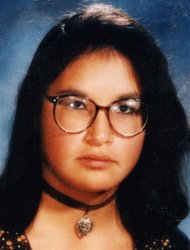
Lana Derrick is shown in this undated photo. THE CANADIAN PRESS/RCMP

VANCOUVER - A list of the 18 women and girls whose deaths and disappearances are part of the RCMP's investigation of the Highway of Tears in British Columbia. They were either found or last seen near Highway 16 or near Highways 97 and 5:

— Aielah Saric Auger, 14, of Prince George was last seen by her family on Feb. 2, 2006, and her body was found eight days later in a ditch along Highway 16, east of Prince George.

— Tamara Chipman, 22, of Prince Rupert was last seen on Sept. 21, 2006, hitchhiking along Highway 16 near Prince Rupert.

— Nicole Hoar, 25, was from Alberta and was working in the Prince George area as a tree planter. She was last seen hitchhiking to Smithers on Highway 16 on June 21, 2002.

— Lana Derrick, 19, was last seen in October 1995 at a gas station near Terrace. She was a student at Northwest Community College in Terrace.

— Alishia Germaine, 15, of Prince George was found murdered on Dec. 9, 1994.

— Roxanne Thiara, 15, of Quesnel was found dead in August 1994 just off Highway 16 near Burns Lake.

— Ramona Wilson, 16, of Smithers was last seen alive in June 1994 when she was believed be hitchhiking. Her body was found 10 months later.

— Delphine Nikal, 16, of Smithers was last seen in June 1990, when she was hitchhiking from Smithers to her home in Telkwa.

— Alberta Williams, 24, disappeared in August 1989 and her body was found several weeks later near Prince Rupert.

— Shelley-Anne Bascu of Hinton, Alta., was last seen in 1983.

— Maureen Mosie of Kamloops was found dead in May 1981.

— Monica Jack, 12, is the youngest victim. She disappeared in May 1978 while riding her bike near Merritt. Her remains were found in 1996.

— Monica Ignas, 15, was last seen alive in December 1974 and her remains were found five months later.

— Colleen MacMillen, 16 was last seen alive in August 1974, when she left her family home in Lac La Hache, B.C., with a plan to hitchhike to visit a friend. Her remains were found the following month. 

In October 2012, the RCMP announced DNA evidence led them to believe Bobby Jack Fowler, who died in an Oregon jail in 2006, killed MacMillen.

— Pamela Darlington, 19, of Kamloops was found murdered in a park November of 1973. The RCMP say they suspect Bobby Jack Fowler was responsible for Darlington's disappearance, but they don't have conclusive proof.

— Gale Weys of Clearwater was last seen hitchhiking in October 1973 and her remains were found in April of the following year. The RCMP say Bobby Jack Fowler is also suspected in her death.

— Micheline Pare of Hudson Hope was found dead in 1970.

— Gloria Moody of Williams Lake area was found dead in October 1969.

SOURCES: The Canadian Press, Highway of Tears Symposium


Friday, May 16, 2014

Friday, May 2, 2014

RCMP confirm report of more than 1,000 murdered aboriginal women


The RCMP confirmed the shocking details Friday that show the number of missing and murdered aboriginal women over the past three decades is much higher than what was originally thought. 
In a statement, the RCMP said there are 1,186 police recorded incidents of aboriginal homicides and unresolved missing women investigations. 
That figure includes 1,017 murdered aboriginal women between the years of 1980 and 2012, as well as 169 missing women dating back to 1952. 
These numbers are included in a national RCMP report on missing and murdered aboriginal women, which is expected to be released in the coming weeks.
"The RCMP has taken on this initiative on behalf of the Canadian law enforcement community because we are concerned about the high incidence of missing and murdered aboriginal women," the statement read.
"We remain committed to resolve outstanding cases, and seeking closure and justice for families."
The force also said that solutions to the "societal concern" of violence against aboriginal women must come not only from the law enforcement community, but all levels of government.
NDP status of women critic Niki Ashton said the newly confirmed number is "shocking."
"If you put it into context, it means that over the last 30 years, 40 aboriginal women and girls didn't — every year — did not come home to see their families," she said to Rosemary Barton on CBC News Network's Power & Politics."
On the same program, Liberal health critic Hedy Fry added that it isn't about how many women there are at all.
"The fact is, at that rate, if there were other kinds of women, other than aboriginal women, missing or murdered in this country, there would be an outcry. There would be an inquiry, there would be something," Fry said. 
The Aboriginal Peoples Television Network first broke the story that there may be more than 1,000 cases of missing or murdered women on Wednesday, which immediately renewed calls to the government for a national public inquiry.
The government, for its part, has refused, referring instead to other initiatives carried out over past years.
"There are some 40 studies dealing with that issue. The RCMP is conducting a further study on its own," Prime Minister Stephen Harper said Friday afternoon.
"Our government from the very outset has said, as one of its priorities — one of its most important priorities — tackling crime including violence against women and girls."
The parliamentary secretary to the public safety minister, Roxanne James, echoed Harper's response on Power & Politics.
"Let me be clear, now is not the time for another study," she said, adding that now is "the time to take real action" and move forward with concrete measures to end violence.
James said the government has taken over 30 measures since coming into office, citing two separate $25-million initiatives from the 2010 and 2014 budgets, one of them being a DNA-based missing persons index.
According to the RCMP statement, the newly confirmed data was compiled with the assistance of Statistics Canada from close to 300 individual police jurisdictions in Canada and shows an over-representation of missing and murdered aboriginal women in police databases.
It also included the point that while aboriginal women make up four per cent of Canada's population, they represent 16 per cent of all murdered females between 1980 and 2012, as well as 12 per cent of all missing females on record.
"This research has done more than just provide numbers. It has identified key vulnerability factors for the victims as well as information on the perpetrators," the statement read.
In 2010, the Native Women’s Association of Canada estimated that there were 582 missing or murdered aboriginal women across the country. 


Manitoba family calls Conservative changes "a slap in the face"


CBC

A Manitoba family says they don't understand how a parliamentary committee, dominated by Conservatives, could vote to drop a recommendation for a public inquiry from a report on missing and murdered women.
Bernice and Wilfred Catcheway's daughter, Jennifer, disappeared six years ago on her 18th birthday.
Her disappearance remains unsolved. Catcheway is one of more than 1,100 cases of missing and murdered women in Canada, a number that RCMP has confirmed and is much higher than anyone has reported to date.
The Catcheways said those numbers are further proof it's a Canadian crisis.
"How many more have to go missing before something is done?" said Bernice.
The family doesn't understand why the parliamentary committee dropped a recommendation for a public inquiry that was originally in a draft report on missing and murdered women.
The draft report obtained by CBC News was prepared by committee analysts who, along with the committee MPs, listened to dozens of witnesses about how to address the issue of missing and murdered aboriginal women.
The draft report was based on testimony from those witnesses, but in the final report prepared by the MPs, the Conservative majority voted to remove the recommendation.
"I felt a slap in the face," Bernice said. "No inquiry? Why not? That's my question. Why not?"
In London, Ont., Prime Minister Steven Harper said instead of paying for an inquiry, the money would be better spent on his government's tough-on-crime agenda and giving police better tools to do their job.
That was cold comfort for Wilfred. 
"It would give me peace of mind that there's proof they are investigating," said Wilfred. "But I question if they are."
The Canadian Bar Association added its voice Friday to a growing number of people calling for a public inquiry.
Aimee Craft, chair of the CBA's Aboriginal Law Section, said you can't find a solution to the problem without first understanding why so many aboriginal women have gone missing in the first place.
"There needs to be attention paid to the systemic issues that are leading to these murders and disappearances," she said. 
Manitoba MP, Niki Ashton, NDP Critic for the Status of Women, repeated her call for an inquiry in the House of Commons on Friday. 
"Why are the Conservatives ignoring the police, victims, and the families?" she said Friday. "And why are they continuing to refuse to call a national inquiry into missing and murdered indigenous women?"
Assembly of Manitoba Chiefs Grand Chief, Derek Nepinak, said the Conservative government's handling of the  report is unacceptable and an inquiry is essential.
"I think that the Prime Minster's response to it is wholly inappropriate," he said. "It's dismissive, as he's always been towards the issue of missing and murdered women."

Tuesday, April 29, 2014

Teen dies by suicide in Edmonton group home

No break-away closet bar despite judicial recommendations in similar death

Hearts On The Ground: Bring Lakota Children Home Video. Please watch.


Tuesday, April 22, 2014

Earth Day Meditaion

The Earth Day meditations are already beginning! Here's a wonderful picture we were sent from New Zealand. Join the event here: http://on.fb.me/1t6bpbj


 Earth day....Our home meditation ritual...creating a sacred field of intention for the protection and celebration of life, humanity and Mother Earth...Namaste...sending our love & harmony from New Zealand 

We Were Children Documentary

Photo: Manitoba wins!

A huge congratulations to Eagle Vision, APTN and the whole team behind We Were Children.

They took home awards last night for Best Sound in an Info/Doc or Lifestyle Program/Series and Best Photography in a Doc Program/Series at the Canadian Screen Awards first gala.

A list of winners can be found here:

http://www.academy.ca//getmedia/aa14badb-1091-4c4e-b85f-94b0046bbaea/ACADEMY_NEWS-Academy_Announces_CSA_WINNERS_Gala_1-Mar_2014.aspx


Please copy & paste this link to view the full documentary.

http://aptn.ca/wewerechildren/?utm_source=facebook&utm_medium=text&utm_campaign=we+were+children

Reliving the horrors of experiences in a residential school.
These institutions were set up by the Canadian and American governments to eradicate the Indian in the child.

They were run by Christian churches and funded by these governments.

The abuse against children was unbelievable with beatings,  rapes by Catholic priests, abuse by the nuns in the name of God, secret burials of children who had died and their deaths hidden by the church from families and the public.

Native children tortured even unto death in  the name of medical science similar to Adolf Hitlers death camps in this respect.

This documentary is a must see for anyone interested in what really happened to innocent children in these schools.


Monday, April 21, 2014

Sayings & Pictures Of Wisdom


CGI - Nature Wallpaper


Dream catcher weaved in Halifax to honour souls of missing, murdered aboriginal women

By Christine BennettFor Metro

Denise John, left and Geri Musqua-LeBlanc work on the frame of a 10 foot dreamcatcher at the Mi’kmaw Native Friendship Centre.Jeff Harper/Metro


Halifax community members gathered on Wednesday to weave a 10-foot dream catcher to honour missing and murdered aboriginal women.

The Mi’kmaq Native Friendship Centre on Gottingen Street hosted the event with support from the Public Service Alliance of Canada.

They’re making 824 small dream catchers to hang off the large one, each of those representing one of the aboriginal women currently missing in Canada.


“A dream catcher is to help you have good dreams and take the bad dreams away, but in this case, those women who are missing, their dreams are gone,” said Debbie Eisan, who works at the centre. 

“We want to make sure that their dreams are not going to be forgotten and their lives won’t be forgotten.”

The purple ribbon on these dream catchers represents the missing woman, and the black bead represents the mourning of that woman.

The bead usually goes in the middle, but this time it’s at the bottom because there’s nothing to celebrate, Eisan said.

This idea came after the death of Loretta Saunders, an Inuit woman who was murdered in February while she was studying at Saint Mary’s University and writing her thesis on missing and murdered aboriginal women.

Eisan is calling on the government to provide equal and fair treatment to aboriginal cases.

“I just want these cases to be treated with the same respect, importance, and dignity as they would any other missing and murdered woman,” she said.