Cherokee Morning Song

Wednesday, November 26, 2014

What Really Happened at the First Thanksgiving? The Wampanoag Side of the Tale

11/23/12

Read more at http://indiancountrytodaymedianetwork.com/2012/11/23/what-really-happened-first-thanksgiving-wampanoag-side-tale-and-whats-done-today-145807


When you hear about the Pilgrims and “the Indians” harmoniously sharing the “first Thanksgiving” meal in 1621, the Indians referred to so generically are the ancestors of the contemporary members of the Wampanoag Nation. As the story commonly goes, the Pilgrims who sailed from England on the Mayflower and landed at what became Plymouth, Massachusetts, in 1620 had a good harvest the next year. So Plymouth Gov. William Bradford organized a feast to celebrate the harvest and invited a group of “Native American allies, including the Wampanoag chief Massasoit” to the party. The feast lasted three days and, according to chronicler Edward Winslow, Bradford sent four men on a “fowling mission” to prepare for the feast and the Wampanoag guests brought five deer to the party. And ever since then, the story goes, Americans have celebrated Thanksgiving on the fourth Thursday of November. Not exactly, Ramona Peters, the Mashpee Wampanoag Tribe’s Tribal Historic Preservation Officer told Indian Country Today Media Network in a conversation on the day before Thanksgiving 2012—391 years since that mythological “first Thanksgiving.”
We know what we’re taught in mainstream media and in schools is made up. What’s the Wampanoag version of what happened?
Yeah, it was made up. It was Abraham Lincoln who used the theme of Pilgrims and Indians eating happily together. He was trying to calm things down during the Civil War when people were divided. It was like a nice unity story.
So it was a political thing?
Yes, it was public relations. It’s kind of genius, in a way, to get people to sit down and eat dinner together. Families were divided during the Civil War.
So what really happened?
We made a treaty. The leader of our nation at the time—Yellow Feather Oasmeequin [Massasoit] made a treaty with (John) Carver [the first governor of the colony]. They elected an official while they were still on the boat. They had their charter. They were still under the jurisdiction of the king [of England]—at least that’s what they told us. So they couldn’t make a treaty for a boatload of people so they made a treaty between two nations—England and the Wampanoag Nation.
What did the treaty say?
It basically said we’d let them be there and we would protect them against any enemies and they would protect us from any of ours. [The 2011 Native American copy coin commemorates the 1621 treaty between the Wampanoag tribe and the Pilgrims of Plymouth colony.] It was basically an I’ll watch your back, you watch mine’ agreement. Later on we collaborated on jurisdictions and creating a system so that we could live together.
What’s the Mashpee version of the 1621 meal?
You’ve probably heard the story of how Squanto assisted in their planting of corn? So this was their first successful harvest and they were celebrating that harvest and planning a day of their own thanksgiving. And it’s kind of like what some of the Arab nations do when they celebrate by shooting guns in the air. So this is what was going on over there at Plymouth. They were shooting guns and canons as a celebration, which alerted us because we didn’t know who they were shooting at. So Massasoit gathered up some 90 warriors and showed up at Plymouth prepared to engage, if that was what was happening, if they were taking any of our people. They didn’t know. It was a fact-finding mission.
When they arrived it was explained through a translator that they were celebrating the harvest, so we decided to stay and make sure that was true, because we’d seen in the other landings—[Captain John] Smith, even the Vikings had been here—so we wanted to make sure so we decided to camp nearby for a few days. During those few days, the men went out to hunt and gather food—deer, ducks, geese, and fish. There are 90 men here and at the time I think there are only 23 survivors of that boat, the Mayflower, so you can imagine the fear. You have armed Natives who are camping nearby. They [the colonists] were always vulnerable to the new land, new creatures, even the trees—there were no such trees in England at that time. People forget they had just landed here and this coastline looked very different from what it looks like now. And their culture—new foods, they were afraid to eat a lot of things. So they were very vulnerable and we did protect them, not just support them, we protected them. You can see throughout their journals that they were always nervous and, unfortunately, when they were nervous they were very aggressive.
So the Pilgrims didn’t invite the Wampanoags to sit down and eat turkey and drink some beer?
[laughs] Ah, no. Well, let’s put it this way. People did eat together [but not in what is portrayed as “the first Thanksgiving]. It was our homeland and our territory and we walked all through their villages all the time. The differences in how they behaved, how they ate, how they prepared things was a lot for both cultures to work with each other. But in those days, it was sort of like today when you go out on a boat in the open sea and you see another boat and everyone is waving and very friendly—it’s because they’re vulnerable and need to rely on each other if something happens. In those days, the English really needed to rely on us and, yes, they were polite as best they could be, but they regarded us as savages nonetheless.
So you did eat together sometimes, but not at the legendary Thanksgiving meal.
No. We were there for days. And this is another thing: We give thanks more than once a year in formal ceremony for different season, for the green corn thanksgiving, for the arrival of certain fish species, whales, the first snow, our new year in May—there are so many ceremonies and I think most cultures have similar traditions. It’s not a foreign concept and I think human beings who recognize greater spirit then they would have to say thank you in some formal way.
What are Mashpee Wampanoags taught about Thanksgiving now?
Most of us are taught about the friendly Indians and the friendly Pilgrims and people sitting down and eating together. They really don’t go into any depth about that time period and what was going on in 1620. It was a whole different mindset. There was always focus on food because people had to work hard to go out and forage for food, not the way it is now. I can remember being in Oklahoma amongst a lot of different tribal people when I was in junior college and Thanksgiving was coming around and I couldn’t come home—it was too far and too expensive—and people were talking about, Thanksgiving, and, yeah, the Indians! And I said, yeah, we’re the Wampanoags. They didn’t know! We’re not even taught what kind of Indians, Hopefully, in the future, at least for Americans, we do need to get a lot brighter about other people.
So, basically, today the Wampanoag celebrate Thanksgiving the way Americans celebrate it, or celebrate it as Americans?
Yes, but there’s another element to this that needs to be noted as well. The Puritans believed in Jehovah and they were listening for Jehovah’s directions on a daily basis and trying to figure out what would please their God. So for Americans, for the most part there’s a Christian element to Thanksgiving so formal prayer and some families will go around the table and ask what are you thankful for this year. In Mashpee families we make offerings of tobacco. For traditionalists, we give thanks to our first mother, our human mother, and to Mother Earth. Then, because there’s no real time to it you embrace your thanks in passing them into the tobacco without necessarily speaking out loud, but to actually give your mind and spirit together thankful for so many things… Unfortunately, because we’re trapped in this cash economy and this 9-to-5 [schedule], we can’t spend the normal amount of time on ceremonies, which would last four days for a proper Thanksgiving.
Do you regard Thanksgiving as a positive thing?
As a concept, a heartfelt Thanksgiving is very important to me as a person. It’s important that we give thanks. For me, it’s a state of being. You want to live in a state of thanksgiving, meaning that you use the creativity that the Creator gave you. You use your talents. You find out what those are and you cultivate them and that gives thanks in action.
And will your family do something for Thanksgiving?
Yes, we’ll do the rounds, make sure we contact family members, eat with friends and then we’ll all celebrate on Saturday at the social and dance together with the drum.

Read more athttp://indiancountrytodaymedianetwork.com/2012/11/23/what-really-happened-first-thanksgiving-wampanoag-side-tale-and-whats-done-today-145807

Monday, November 24, 2014

Stealing Children: A Look at Indigenous Child Removal Policies

http://indiancountrytodaymedianetwork.com/2014/11/21/stealing-children-look-indigenous-child-removal-policies-157884

Margaret Jacobs A Generation Removed
Craig Chandler/University Communications/University of Nebraska-Lincoln
Margaret Jacobs, professor of history and director of the Women’s and Gender Studies Program at the University of Nebraska, Lincoln, has just published a second volume based on her research.

Read more athttp://indiancountrytodaymedianetwork.com/2014/11/21/stealing-children-look-indigenous-child-removal-policies-157884

Tanya H. Lee

Margaret Jacobs, professor of history and director of the Women’s and Gender Studies Program at the University of Nebraska, Lincoln, won the Bancroft Prize for her bookWhite Mother to a Dark Race, an investigation of the U.S. and Australian policies of breaking up indigenous families and removing children to be raised in boarding schools run by whites. She has just published a second volume based on her research.A Generation Removedlooks at indigenous child removal policies from just after World War II up until passage of the Indian Child Welfare Act in 1978.
ICTMN interviewed Jacobs about her work. “When I got to Australia [to begin research] it was shortly after the ‘Bringing them home’ report [1997] had come out about the stolen generation [of Australian Aborigine children]. When I went to the archives, I asked, ‘What were white women doing about indigenous children? Were they involved in this policy of the stolen generation?’”
She very quickly discovered that they were. “I was surprised that they were involved because this was an era when white women worldwide were talking about themselves as wanting to extend their maternal instincts and impulses into the world at large. So I assumed these women would be supporting indigenous motherhood and supporting the rights of indigenous women to keep their children.”
But instead, white women “really thought that indigenous women didn’t mother properly. They worked to some extent on trying to teach indigenous women how they thought they should be taking care of their children and carrying out their domestic duties. But many of them believed when there was resistance that the only way to raise children properly was to take them away from the environment of their mothers and cultures.”
Coming back to the U.S., she asked the same question and found that “many white women were involved in even a more pronounced manner in the United States than in Australia. They were involved in creating policy and were even hired by the federal government to carry out the policy of removing indigenous children.”
“So that was the book that I wrote. It was calledWhite Mother to a Dark Race: Settler Colonialism, Maternalism, and the Removal of Indigenous Children in the American West and Australia, 1880-1940. As I was researching that book I was also very interested in looking at more recent examples of the removal of indigenous children. This second book, calledA Generation Removed: The Fostering and Adoption of Indigenous Children in the Postwar World, focuses less on white women and much more on indigenous women’s experience of having children removed and the activism that they engaged in to reclaim the care of their children.”
Jacobs found that during the termination period, the Bureau of Indian Affairs was eager to close down the boarding schools because they were not accomplishing the goal of assimilating American Indian children into the mainstream culture, and they were expensive.
“So they turned to this policy of trying to close down the boarding schools and they turned toward a policy of trying to turn over the education and care of Indian children to the states,” says Jacobs.
While there were some American Indians working for the BIA in the ‘50s and some sympathy to the problems of Indian families, says Jacobs, “there were rarely any American Indian people working in the state bureaucracies. And there were rarely any people trained to have any sensitivity to American Indian societies or concerns. So this move to change the jurisdiction over Indian children to the states was a move that contributed to greater numbers of Indian children being removed from their families, fostered by white families and eventually moved into the adoption system.”
Jacobs says a close examination of the records shows that 25 percent to 35 percent of Indian children were removed from their families.
In the course of her research, she says, “I was able to find all of these women in their own tribal communities who were working to create really innovative programs to promote child welfare within their communities. They were trying to find foster families within the community. They were creating these kinds of preventative programs for families to prevent children from being taken in the first place and to strengthen families or rehabilitate families. These women were quite incredible. Some were also getting involved in a national level to try to organize to stop this practice.”
One of these women was Evelyn Blanchard, Laguna/Yaqui, who became an advocate for children and families after losing a court case in which Navajo grandparents were not allowed to take custody of their grandchild, who had been placed outside the community. She worked with the Association on American Indian Affairs to help get the Indian Child Welfare Act passed in 1978. “After the law was passed,” Blanchard told ICTMN, “I worked with many tribes to help them develop their own children’s codes regarding care of children in their communities and to help them figure out how they would respond to the law, which was written for state courts, not Indian tribes.”
Evelyn Blanchard began her advocacy on behalf of American Indian children and families in the 1970s. (Photo courtesy of the University of Nebraska Press)
Blanchard explains, “The ICWA regulates the acts of state courts or public and private agencies. That’s what it’s supposed to do and its intent is to prevent the breakup of the Indian families because records show that before the passage one out of every four children had been removed from his or her family and 85 percent of those kids were not in Indian homes. The tribes were tired of it. They wanted it stopped and the pattern reversed.”
Asked whether the Baby Veronica case was an anomaly in present-day Indian child welfare proceedings, Blanchard responds, “It’s not an anomaly. Those situations occur regularly. And in the majority of cases, I would venture the people yet do not have the legal assistance and counsel they need to fight back against these injustices and irregularities. Even today many children are removed from their parents without due process. In many cases the parents do not have the kind of support they need. It’s a very serious situation and the breakup of Indian families continues. It needs to be stopped.”
Jacobs says, “American Indian children are overrepresented in the child welfare systems in their states. There are five states in particular where they are really overrepresented, including Nebraska and South Dakota. The South Dakota case is really interesting because what’s really going on there, even though we have the ICWA to try to stop this practice, is that there’s a clause in the ICWA that allows for the emergency removal of Indian children and apparently officials in South Dakota interpret this provision very liberally.”
Jacobs notes thatA Generation Removedis also about Canada and Australia. “I think that it’s important to show that this is going on globally, at the same time in three different places, and that the same practices and policies are being used against indigenous families in all three places. The international part of my work is important to convince people that this is really a serious issue of human rights violations against indigenous families.”

Read more athttp://indiancountrytodaymedianetwork.com/2014/11/21/stealing-children-look-indigenous-child-removal-policies-157884


Thursday, November 20, 2014

'Not Even Human' How Canadian Govt. Abused Aboriginal Children in TB Experiments

7/28/13

Read more at

http://indiancountrytodaymedianetwork.com/2013/07/28/lab-rats-guinea-pigs-canadians-experimented-aboriginal-infants-tuberculosis-vaccine

While aboriginal children died of tuberculosis in the 1930s and 1940s, Canadian health officials tried out experimental vaccines on infants rather than ameliorate the conditions of poverty that sparked that and a host of other illnesses.
These revelations, while not new, have re-emerged in the wake of the discovery that nutritional experiments were conducted on First Nations children in the 1940s.
As with the nutritional experiments, the TB vaccine research capitalized on the poverty of its subjects to conduct studies rather than address the underlying factors leading to the high incidence of the lung infection, says a report by the Aboriginal Peoples Television Network(APTN).
“It is pretty depressing. It is just document after document. They treated these people like they were not even human,” said Maureen Lux, a professor at Brock University who is writing a book about the treatment of indigenous people in TB sanitoriums, in an interview with the network. “It is definitely the hardest thing I have ever done.”
In the interview posted by APTN on July 24, Lux discussed the findings she had first published in a 1998 paper on the vaccine trials, which she is expanding into the book due out next year.
“Historians have been reluctant to question medical care because we are enthralled with the power of medicine,” she told APTN. “Once I started looking at what was going and how they were operated and in whose interest, it becomes a fairly dark story.”
In studying aboriginal people and the medical system, Lux examined reserve conditions in southern Saskatchewan, in the Qu’Appelle region, during the early 20th century.
In expanding her paper on the treatment of indigenous people in sanatoriums, she found that a federal program that ran from 1930 to 1932 had cut the tuberculosis rate in half by improving housing conditions, drilling wells to access better-quality water, and enhancing nutrition for children and pregnant women. Lux’s paper, "Perfect Subjects: Race Tuberculosis and the Qu’Appelle BCG Vaccine Trial," detailed these findings, as well as the fact that the government had chosen to ignore this solution and seek the cheaper method of simply vaccinating babies against the disease, APTN reported.
“The general death rate and the infant mortality rate both also fell. Thus, before the BCG vaccine trials were begun, the tuberculosis death rate had been reduced by half by marginal improvements in living conditions, and especially by segregating those with active tuberculosis,” wrote Lux, according to APTN.
Although the vaccine ultimately was proven to work—and is still in use today—children died of gastroenteritis and pneumonia during the study period, Lux wrote. Although some medical professionals expressed misgivings about the ethics of such studies, they continued.
“Between October 1933 and 1945, a total of 609 infants were involved in the tests—half given the vaccine, half not,” the Canadian Press reported. “Results were clear: nearly five times as many cases of TB among the non-vaccinated children. But the real lesson from the tests was the connection between dire living conditions and overall health.”
The report went on to elaborate.
“Of the 609 children in the tests, 77 were dead before their first birthday, only four of them from TB,” the Canadian Press wrote. “Both vaccinated and unvaccinated groups had at least twice the non-tuberculosis death rate as the general population.”
This would seem especially cruel in light of the TB scourge that persists today, especially in Inuit communities.
But the experiments didn’t stop there, Lux told APTN. The TB antibiotic streptomycin was administered to First Nations patients in other trials at Charles Camsell hospital in Edmonton, which has since closed down. In addition, Lux told APTN, doctors surgically removed TB from indigenous patients up until the 1950s and 1960s, long after the practice had been discontinued in the non-indigenous population.
“Do we interpret that surgeons and medical directors thought they were doing right and never questioning the assumption that these people were going to actually spread TB when they actually weren’t?” Lux told APTN. “They could do it and they did it and that is as shocking as any kind of experiment.”

Read more athttp://indiancountrytodaymedianetwork.com/2013/07/28/lab-rats-guinea-pigs-canadians-experimented-aboriginal-infants-tuberculosis-vaccine

Monday, November 17, 2014

House Vote in Favor of the Keystone XL Pipeline an Act of War

http://lakotavoice.com/2014/11/15/house-vote-in-favor-of-the-keystone-xl-pipeline-an-act-of-war/


November 14, 2014
by Aldo Seoane
Wica Agli
Rosebud, SD – In response to today’s vote in the U.S. House of Representatives to authorize the Keystone XL tar sands pipeline, the Rosebud Sioux Tribal President announced that the Rosebud Sioux Tribe (Sicangu Lakota Oyate) recognizes the authorization of this pipeline as an act of war.
The Tribe has done its part to remain peaceful in its dealings with the United States in this matter, in spite of the fact that the Rosebud Sioux Tribe has yet to be properly consulted on the project, which would cross through Tribal land, and the concerns brought to the Department of Interior and to the Department of State have yet to be addressed.
“The House has now signed our death warrants and the death warrants of our children and grandchildren. The Rosebud Sioux Tribe will not allow this pipeline through our lands,” said President Scott of the Rosebud Sioux Tribe. “We are outraged at the lack of intergovernmental cooperation. We are a sovereign nation and we are not being treated as such. We will close our reservation borders to Keystone XL. Authorizing Keystone XL is an act of war against our people.”
In February of this year, the Rosebud Sioux Tribe and other members of the Great Sioux Nation adopted Tribal resolutions opposing the Keystone XL project.
“The Lakota people have always been stewards of this land,” added President Scott. “We feel it is imperative that we provide safe and responsible alternative energy resources not only to Tribal members but to non-Tribal members as well. We need to stop focusing and investing in risky fossil fuel projects like TransCanada’s Keystone XL pipeline. We need to start remembering that the earth is our mother and stop polluting her and start taking steps to preserve the land, water, and our grandchildren’s future.”
The Rosebud Sioux Tribe, along with several other South Dakota Tribes, stand together in opposition to risky and dangerous fossil fuel projects like TransCanada’s Keystone XL. The proposed route of TransCanada’s Keystone XL pipeline crosses directly through Great Sioux Nation (Oceti Sakowin) Treaty lands as defined by both the 1851 and 1868 Fort Laramie Treaties and within the current exterior boundaries of the Rosebud Sioux Reservation and Cheyenne River Sioux Reservation.
Admin note:
Please join with our Brothers and Sisters in their fight against this atrocity. 

Friday, November 7, 2014

Homeless woman fined for building her own home

CBC

https://ca.news.yahoo.com/homeless-woman-fined-building-her-110000301.html


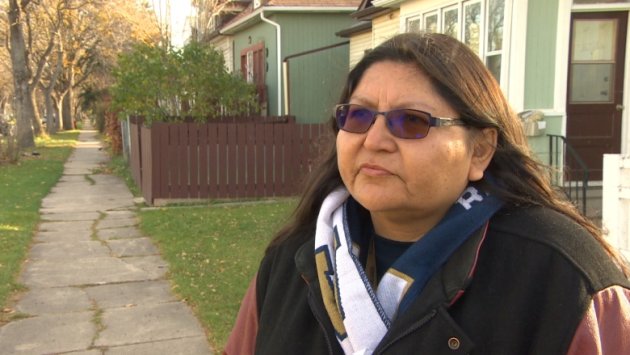
"We're trying to believe as Anishinaabeg, we could live a better life," Darlene Necan says of her plans to construct her own home, plant a garden and become self-sustaining. "But words are easier than actually doing it."
CBC/CBC - "We're trying to believe as Anishinaabeg, we could live a better life," Darlene Necan says of her plans to construct her own home, plant a garden and become self-sustaining. "But words are easier than actually doing it." 

A First Nations woman in Northern Ontario faces thousands of dollars in fines and a stop-work order on the cabin she is attempting to build in the place where she grew up.​
Darlene Necan is a member of the Ojibways of Saugeen First Nation, but she's been unable to acquire housing in that community, about 400 kilometres northwest of Thunder Bay, since the reserve was created in the late 1990s. 
Last year, Necan began building with donated materials on land where her family home once stood, 20 kilometres south of her reserve, in the unorganized township of Savant Lake, Ont. 
"This is my castle and I'm so proud to have it, even though it's not done yet," Necan said during a recent visit to the one-room, plywood house she is not allowed to live in. 
The Ministry of Natural Resources and Forestry has charged Necan with breaches of the Public Lands Act that carry fines of up to $10,000, and up to an additional $1,000 fine each time she is caught continuing to build. Necan believes it is because somehow the place she grew up has become Crown land. The ministry did not respond to questions from CBC News about this story.
The Ministry of Natural Resources charged Darlene Necan with violating the Public Lands Act after she began building this one-room cabin in Savant Lake, Ontario.The Ministry of Natural Resources charged Darlene Necan with violating the Public Lands Act after she began building …'A lot of times I cry'
As an unorganized township, Savant Lake doesn't have a municipal leader. Denis Mousseau owns the only store, across the street from his hotel, on one of the community's two main roads.
"It's a common thing for First Nations people to do, is build their own house without title to the land," Mousseau said.  "First Nations people have the right to do that and I don't see why [the Ministry of] Natural Resources should be hassling her over this."
Necan has boarded up the unfinished doorway to her cabin for the winter, and said she feels "shattered" by the charges against her. Her next court date is Nov. 20. 
​"I still keep going with this fight no matter how awful it makes me feel for trying to house myself and help people, because a lot of people don't believe in themselves or that things can change if you fight hard enough," Necan said, her voice cracking.
"It's what I try to believe. I try to be hopeful. That's hard too and a lot of times I cry by myself here. But I talk to my [late] mom and my [late] dad and it keeps me going because I keep thinking of them."
'Not any better in the city'
Necan has spent much of her adult life couch-surfing among relatives and camping out on the family trap line when the weather allows. The 55-year-old was looking forward to a different life, living in her own home and offering shelter to family members.
"This is exactly the same spot where we lived," Necan said. "We slowly started moving to the cities because we didn't have anything after my dad got hurt and we were pretty well desperate."
Necan's father was injured while working for the railway.
"My family... they're not any better in the city than they were here," she says. "Here, at least they were free to roam around in the bush and go hunting and all that, but in the city you need at least five, 10 bucks to even live for the day."
This is my castle and I'm so proud to have it, Darlene Necan says of the one-room house she built with donated materials on the same spot where she grew up.This is my castle and I'm so proud to have it, Darlene Necan says of the one-room house she built with donated …'Aren't we under treaty?'
Fewer than 100 people live on the reserve up the road. Edward Machimity has been chief for nearly two decades, since the reserve was created. Necan said he refuses to help her, or even answer her questions.
"He has said that he has to be careful about how he helps the off-reserve people and that really got me confused because I thought, aren't we on Anishinaabe land right now? Aren't we under treaty?" Necan said.
"Isn't this why we elected him for, is to help all people, not only the people inside reserve? That is so crap because natives are scattered all over Canada. How can they say only the people on reserve have rights?"

Machimity did not return repeated calls from CBC News.


Wednesday, October 29, 2014

'Pocahottie' Halloween costume offends aboriginal woman


A Winnipeg woman says some Halloween costumes being sold in the city are offensive and hurtful to her aboriginal culture, including one outfit that she saw recently.
Mary Swain says she was browsing at Halloween Alley on Pembina Highway when she spotted a costume for adult women called "Pocahottie," which depicts the Disney character Pocahontas in a short, low-cut dress.
"I just couldn't believe it," Swain told CBC News.
"It's my culture and we dress up in regalia when we dance at ceremonies and stuff, so I feel like people are disrespecting aboriginal people."
She said she also saw accessories made to look like traditional aboriginal headdresses, as well as items labelled "sexy Indian wigs."
Swain said she immediately complained to the manager.
"I talked to her about it, and I told her my concerns that I didn't think it was appropriate for her to sell these costumes in the store," she said. "That's my culture; it's not a costume."
Another Halloween-themed store, Spirit Halloween on Regent Avenue, carried adult costume outfits with names like "Reservation Royalty," "Indian Warrior" and "Native Spirit."
Some of the outfits included feather headpieces. Many in the aboriginal community have banned the use of headdresses as fashion items, as they are considered sacred to many indigenous cultures.
'Native women trivialized as sexual objects'
Jacqueline Romanow, associate professor in the University of Winnipeg's indigenous studies department, said she, too, has been offended by some Halloween costumes.
"The costumes that are most offensive to me are the ones that show native women as trivialized sexual objects," she said. 
"Given the history in this country, given the context of racism indigenous people experience every day, given the hyper sexualization of these costumes, that's really the problem." she said.
Romanow said for a society dealing with missing and murdered aboriginal women, the offensive costumes are a concern.
"I think that's more than insensitive, I think it's dangerous. It reinforces the marginalization and the victimization of some of the most vulnerable people in our society," she said. 
Store official responds
The regional manager for Halloween Alley, which has 37 locations across Canada, told CBC News he respects all cultures and takes feedback seriously, but there are no plans to remove the costume items in question.
Steven Pierson said what may be considered offensive to one person may not be offensive to another.
"The industry that we work in, you know, does have some challenges with sensitivities on a whole lot of fronts," he said.
Pierson added that many of the costumes in question are sold to aboriginal people.
"The reality is by far … our largest customer base are those customers in the aboriginal community," he said.
"It's not really my place to find what's offensive or not … I'm not an aboriginal person."
CBC News has not been able to reach officials with Spirit Halloween as of Monday night.
As for Swain, she said the official explanation is not good enough for her.

"I don't feel people should be making fun of us," she said.
                                      ------------------------------------------------

Admin note: As Native people I agree that what this company and others is selling is highly offensive to us. 

What is happening here, in our opinion, is another form of racism. 

They are not showing respect for Native heritage nor its people.

"The regional manager for Halloween Alley, which has 37 locations across Canada, told CBC News he respects all cultures and takes feedback seriously, but there are no plans to remove the costume items in question."

I AM ASKING THAT THOSE WHO READ THIS ARTICLE PLUS OTHERS RELATED TO ANYTHING ALONG THESE LINE BOYCOTT  Halloween Alley at 1686 Pembina Highway , Winnipeg, Manitoba PLUS ANY OF THEIR OTHER STORE IN YOUR AREA. 

ALSO, Spirit Halloween on 1570-B Regent Ave W, WINNIPEG, Manitoba WHO IS ALSO SELLING HALLOWEEN COSTUMES WHICH ARE RACIST.

THIS ACT IS DISCRIMINATION AGAINST OUR PEOPLE.

Mass Execution of Children Alleged

Posted on November 09, 2011 by itccs


My brother Rufus saw them take all those children and stand them up next to a big ditch, and then the soldiers shot them all and they all fell into that ditch. Some of the kids were still alive and they just poured the dirt in on top of them. Buried them alive.
Prisoners-of-the-church
This mass murder happened in 1943 – not in Nazi held Europe, but in Brantford, Ontario, on land occupied by the Canadian Army, at its Basic Training Camp Number 20.
These words were spoken today on the Native America Calling Radio program by Lorna McNaughton of Oshweken, Ontario: a survivor of the infamous “Mush Hole”, the Brantford Mohawk Indian residential school, run by the Church and Crown of England until 1970.
Why were these children shot? According to Lorna:
The school was overcrowded just then. I was there, I saw the army bring in all these cots for lots of new kids who showed up from all over the country. They must have just wanted to get rid of all the extra hungry mouths; it was wartime and everything was rationed. One day those new kids were in the dorms, then they were all taken out, and we never saw any of them kids again.
A probable site of this mass burial of the executed children has been located, and is now under the protection and jurisdiction of the Onkwehonwe Mohawk Nation and its clan mothers. Surveys and possible excavations will proceed under professional guidance, and according to the protocols of the Onkwehonwe people.
The Mohawk people call upon all people of good will to help protect the remains of these murdered children until international observers can arrive to monitor events and evidence that is uncovered.
This site is under the jurisdiction of the Onkwehonwe Mohawk people and not the government of Canada or the Crown or Church of England.
The investigation into the Canadian Genocide continues. Stay tuned for regular updates from the Onkwehonwe Mohawk Nation and the ITCCS.
Issued by the ITCCS office, Brussels, and Rawennatshani of the Turtle clan, Onkwehonwe people
November 9, 2011
Mohawk residential school
The Mohawk Institute, 1832-1970 – Church of England (Anglican) operated